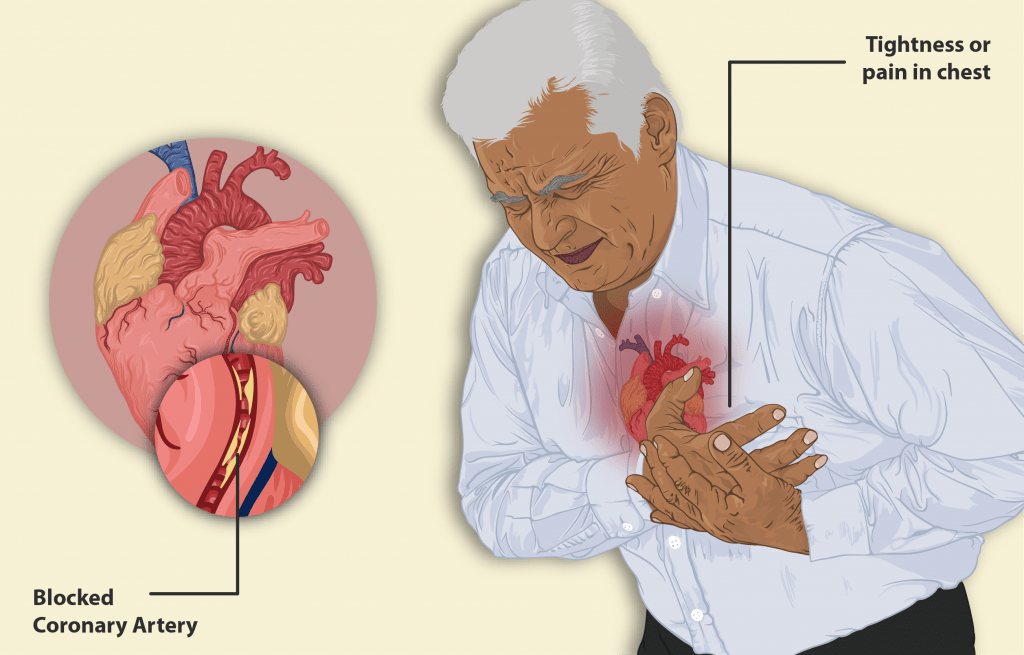
Myocardial infarctions, also known as heart attacks, are one of the main causes of death worldwide. Even though heart attacks are well-known for their dramatic presentation in films and television shows, they frequently begin with mild symptoms that many people would brush off as minor aches or discomforts. Understanding these indicators can mean the difference between life and death because prompt medical attention is essential. The following five bodily pains are signs of a potential heart attack:.
- Chest Pain and Discomfort
Chest pain is the hallmark symptom of a heart attack, but it’s not always the intense, crushing pain often depicted in media. It can vary greatly, manifesting as pressure, squeezing, fullness, or a burning sensation. This discomfort typically occurs in the center or left side of the chest and may last for a few minutes or come and go intermittently.
Why It Happens:
During a heart attack, a blockage in one or more of the coronary arteries restricts blood flow to the heart muscle, causing damage. The resulting pain or discomfort in the chest is a direct consequence of the heart muscle being deprived of oxygen.
Key Indicators:
The pain may spread to the shoulders, arms, neck, jaw, or back.
It might be accompanied by other symptoms such as shortness of breath, sweating, or nausea.
- Arm Pain
Another well-known indicator of a heart attack is pain that travels down the left arm from the chest. But it can also happen in the right arm at the same time or in both arms. The pain may originate in the chest and radiate outward, or it may be an isolated symptom that is not accompanied by any palpable chest pain.
Why It Happens:
The nerves supplying the heart and those serving the arms intersect at the spinal cord. During a heart attack, the brain can misinterpret signals from the heart, causing referred pain in the arm.
key Indicators:
The pain might feel like a deep, throbbing ache or a sharp, shooting sensation.
It is often persistent and may not be relieved by changing position or applying pressure.
- Jaw or Neck Pain
Jaw or neck pain can be a less obvious but significant symptom of a heart attack, especially in women. This pain might be misdiagnosed as a dental problem or muscle strain, delaying critical medical attention.
Why It Happens:
Similar to arm pain, jaw and neck pain during a heart attack results from the convergence of nerve pathways. The heart, jaw, and neck share common nerve pathways, leading to referred pain in these areas when the heart is in distress.
Key Indicators:
The pain can be unilateral (affecting one side) or bilateral (affecting both sides).
It might increase with physical activity or emotional stress and subside with rest.
- Back Pain
Back pain, particularly in the upper back, is another potential indicator of a heart attack. This symptom is more common in women and can be mistaken for muscular strain or spine issues.
Why It Happens:
During a heart attack, the reduced blood flow to the heart can cause pain to radiate to the back, particularly between the shoulder blades. This pain is often due to the same nerve crossover that causes pain in other parts of the body.
Key Indicators:
The pain may be persistent and not relieved by common back pain treatments like heat or cold packs.
It might be accompanied by other symptoms such as shortness of breath, sweating, or dizziness.
- Stomach Pain
Stomach pain, or abdominal discomfort, can be a surprising symptom of a heart attack. It might be mistaken for indigestion, heartburn, or a stomach ulcer, particularly if it is not accompanied by chest pain.
Why It Happens:
The vagus nerve, which runs from the brain to the abdomen, also supplies the heart. Pain signals from a distressed heart can travel along the vagus nerve, leading to sensations of discomfort or pain in the stomach area.
Key Indicators:
The pain can feel like severe indigestion or a burning sensation in the upper abdomen.
It might be associated with other gastrointestinal symptoms, such as nausea or vomiting.
Conclusion
Understanding and recognizing the diverse manifestations of heart attack-related pain can be life-saving. While chest pain is the most well-known symptom, arm, jaw, neck, back, and stomach pains are also critical indicators. If you or someone you know experiences these symptoms, especially in combination with other signs like shortness of breath, sweating, or nausea, seek emergency medical attention immediately. Early diagnosis and treatment are essential in preventing serious damage to the heart and improving survival rates. Remember, heart attacks can present differently in men and women, with women often experiencing more subtle signs. Awareness and prompt action can save lives.
 technical kartik
Leave a comment